

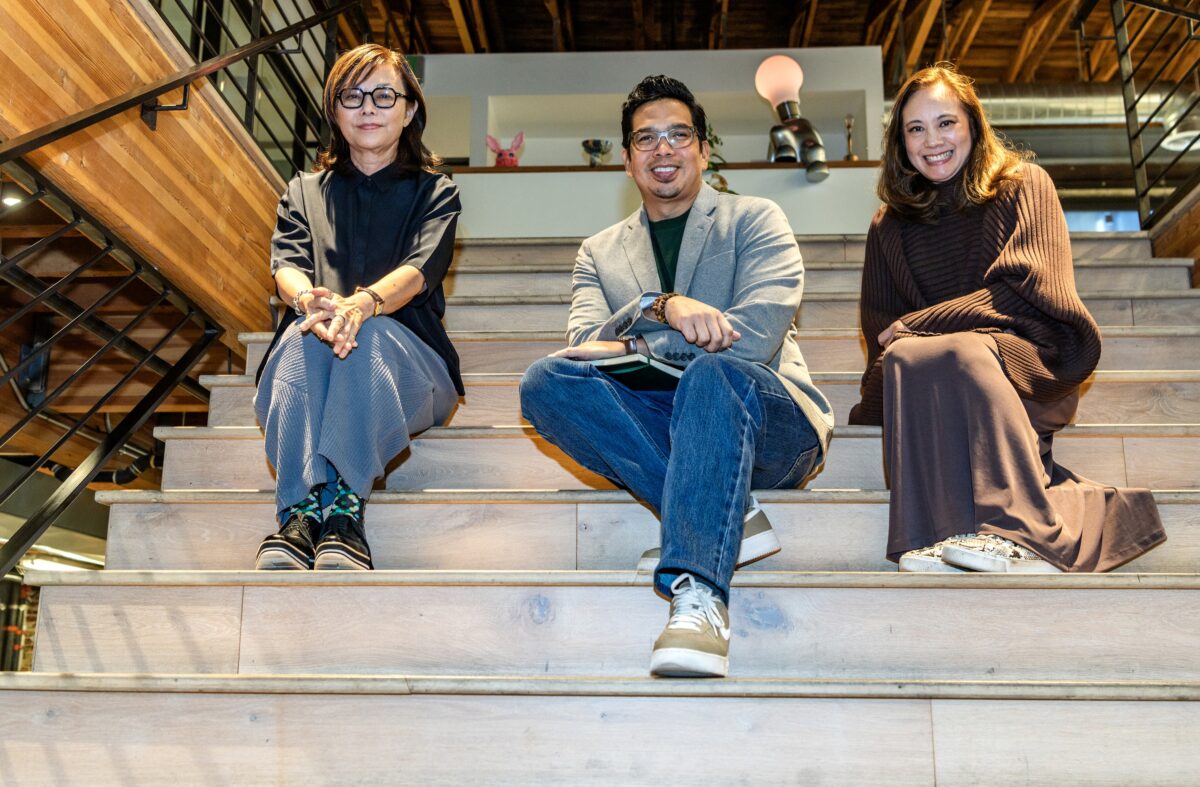
Intertrend once sat nine floors above downtown Long Beach.
The advertising firm moved to street level a decade ago, changing how it saw the city and its role within it.
The company’s clientele is mostly faraway Fortune 500 executives who rarely visit, yet it renovated a dilapidated street-level building on Broadway — once assessed at negative value.
The reason was to plant deeper roots in Long Beach and help create the sense of belonging that a home should provide.
“Creativity doesn’t live just within our four walls,” founder Julia Huang said in a recent interview. “It lives outside our walls.”
Intertrend hosts regular events and has facilitated collaborations among students, local businesses and artists — many organized through the nonprofit Creative Class Collective.
Together, the move and the work reflect Huang’s belief that culture and community can’t be understood from a perch looking down.
I recently sat down with Huang as downtown continues to grow vertically and the city prepares for the world’s attention during the 2028 Olympic Games, both of which raise a perennial question for Long Beach: What is its identity?
Know thyself
Huang’s perspective is unique: Born and raised in Japan and Taiwan, she came to the United States, earned a graduate degree and worked in New York and Los Angeles corporate settings before founding Intertrend in 1991.
She is no longer an outsider but can still see the city from that perspective.
Huang knows that Long Beach is a proud place that recoils from others “telling it what to do.” But what it is or wants is largely dependent on who you ask.
That presents challenges as downtown fills quickly with new residents while businesses continue to struggle with limited foot traffic. Beyond downtown, new tech and aerospace firms have occupied office space by the acre near the airport — while at the same time, the city’s legacy associations with West Coast rap artists like Snoop Dogg and Warren G are as relevant as ever.
The city’s complex ecosystem includes a collection of “communities” — whether it be City Hall, the tourism sector, musicians and artists or individual proprietors and residents — that tend to exist in parallel, not in conversation, Huang said, leading to a very fragmented identity.
The perils of speed
Society today moves fast, and attention — the core business of Intertrend — has become elusive.
Huang, a Boomer, admits she struggles at times with the pace and style of this moment. “30 to 35 years ago, you could pause and think,” she said.
But culture, she said, must be created intentionally, and that requires thinking, listening, talking — all of which take time.
Without that, she fears Long Beach risks becoming a city of landlords, with creators, talent and cultural energy being centered outside its boundaries.
“I meet the most interesting Long Beach residents outside of Long Beach,” Huang said — at galas in West Hollywood, museums in Los Angeles, or tours in foreign countries. “Why is that? I cannot understand that.”
The challenge for the city, she said, is adapting fast enough to survive while slowing down enough to care for the people who live here.
That Long Beach can accommodate so many versions of itself is a beautiful asset, she said. “We also need to make sure there is a north star.”